Central Park, an iconic 843-acre oasis nestled in the heart of Manhattan, New York, captivates millions annually.
This urban sanctuary, teeming with diverse ecosystems and architectural marvels, offers respite from the city's relentless pace.
As an urban park, it plays a critical role in community development and societal cohesion.
This exploration of Central Park's timeless beauty endeavors to unveil its historical evolution, natural wonders, and future conservation plans.
The inception of Central Park, an iconic urban oasis located in Manhattan, New York City, can be traced back to the 19th century when rapid population growth necessitated the creation of open spaces.
This led to the authorization of the park's site purchase in 1853 and the subsequent selection of Frederick Law Olmsted and Calvert Vaux's Greensward Plan in 1858 as the winning design.
This historic event was akin to a hard-fought battle, a David against Goliath struggle, where the odds were stacked against the park's creation.
Facing challenges such as rocky terrains and swampy landscapes, the construction, humorously enough, was more akin to a Herculean task than a pleasure walk in the park.
Despite these trials, the park finally emerged in 1876, a testament to the city's resilience and determination.
Spanning a vast 843 acres in the heart of Manhattan, this urban green space is strategically divided into three sections: North End, Mid-Park, and South End, each with its unique features and attractions.
The North End, considered the park's wild child, boasts the Ravine, the park's only stream, and the North Woods, likened to the Adirondacks with its rugged beauty.
On the other hand, Mid-Park is the park's social butterfly, with its bustling Bethesda Terrace and Central Park Zoo.
Last but not least, the South End, the park's old soul, is home to the oldest architectural feature, the Pond.
Discovering each section is like unwrapping a gift that keeps on giving, an exploration that fills the heart with joy, the mind with knowledge, and the legs with a good workout.
Flora and fauna in Manhattan's urban green space vary widely, contributing to a diverse ecosystem that enriches the visitor experience.
Towering trees, vibrant flowers, and lush bushes adorn the landscape, creating an awe-inspiring panorama.
Numerous avian species add color and melody to the park, while squirrels dash about with acrobatic finesse, eliciting chuckles from onlookers.
The shimmering lakes host an array of aquatic life, including the famous Central Park turtles that often win the unofficial 'slow and steady' race against time.
The park's diverse ecosystem, with its flora and fauna, weaves a tapestry of natural wonders, offering a delightful spectacle for the urban explorer.
It's nature's stand-up comedy, where the punchlines are delivered by chirping birds, rustling leaves, and the occasional photobombing squirrel.
Architectural marvels in the form of bridges and structures add a distinct charm to Manhattan's renowned urban green space.
The intricate designs of these structures are a testament to the ingenuity of their creators.
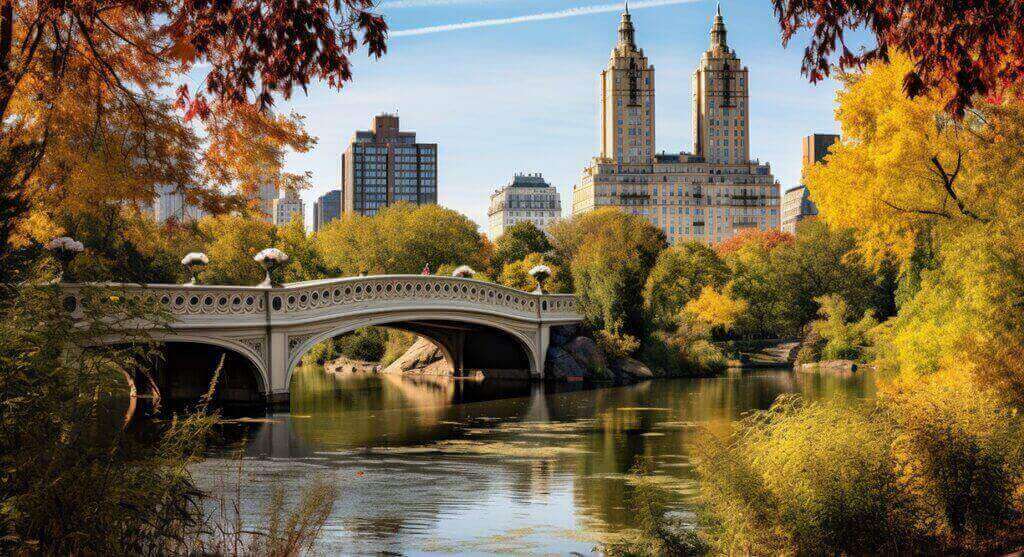
The Bow Bridge, a cast-iron lacework of beauty, gracefully spans across the Lake, offering a delightful spectacle for the wandering eye.
Bethesda Terrace, with its grand staircase and stunning views, exudes an aura of magnificence.
The whimsical Alice in Wonderland statue is a favorite among the park's younger visitors.
Balto's bronze statue stands proud, forever frozen in a mid-sprint pose, a silent tribute to the heroic sled dog.
The humorous quirk is that these silent stone and metal inhabitants of Central Park often garner more visitors' selfies than the natural wonders around!
Throughout the four seasons, the urban green space in Manhattan showcases a diverse range of aesthetics. Each season offers a unique perspective on the landscape.
Winter transforms Central Park into a monochrome wonderland. Snow-capped trees and frozen lakes lend an ethereal beauty to the park. It becomes a serene and peaceful place to explore.
Spring heralds a burst of chromatic vivacity. Flowers bloom, painting the park in hues of pink, white, and yellow.
The vibrant colors bring a sense of renewal and joy to the surroundings.
Summer offers a verdant expanse in Central Park. It becomes the perfect canvas for picnics, sunbathing, and boat rides.
Read more: The Statue of Liberty in New York: Symbol of Freedom and Inspiration
The lush greenery and warm weather make it a popular destination for outdoor activities.
Autumn, the showstopper, sets the park aflame with oranges, reds, and yellows. The leaves change color and create a stunning display.
As they fall, the leaves crunch underfoot, creating a natural symphony that signals the approach of another winter.
The yearly performance of nature in Central Park is a sight to behold. The park serves as the stage, and the seasons act as the main characters.
Visitors are always captivated by the ever-changing beauty and find themselves giving rave reviews.
Established in 1980, the Central Park Conservancy has been instrumental in the restoration, management, and enhancement of the Manhattan-based urban green space, striving to maintain its integrity as a beloved public park.
This not-for-profit organization, under contract with the New York City Department of Parks and Recreation, is akin to a park superhero—fearlessly tackling litter, championing flower beds, and ensuring the park's bridges don't crumble under the weight of New York's enthusiasm for park-usage.
There's no tree too tall, no pond too murky, no squirrel too mischievous for this team of dedicated park custodians.
Their diligent servitude has made Central Park not just a green oasis, but a testament to the city's resilience and undying love for nature.
Numerous activities and attractions draw millions of visitors to this urban haven annually, ranging from leisurely strolls and picnics to engaging in various sports and cultural events.
Central Park's expansive landscapes host a myriad of picturesque spots, such as the Bethesda Terrace with its enchanting angel statue and the Central Park Zoo's delightful menagerie.
A venture into the park may lead to a surprise encounter with a Shakespearean performance or a squirrel practicing gymnastics.
The luscious greenery conceals iconic gems like the Strawberry Fields, promising a serenade from an enthusiastic Beatles fan.
A carousel ride may invoke a sense of nostalgia, while a paddle across the lake in a rented boat may incite a friendly water fight.
Central Park, indeed, offers a cocktail of experiences, each more intoxicating than the last.
Moving from the adrenaline rush of activities and attractions within the verdant expanse of Central Park, the focus now shifts toward the park's vibrant art and cultural scene.
This iconic sanctuary, nestled amidst the bustling cityscape of Manhattan, boasts an impressive collection of statues and a lively calendar of performances.
With over 50 sculptures, including the famed Alice in Wonderland, Central Park presents an open-air museum, delighting visitors with its historical and artistic richness.
Adding to this, the park's stages have witnessed performances ranging from Shakespearean dramas to pop concerts, infusing the air with culture and creativity.
It also hosts the renowned 'Shakespeare in the Park' festival - the only place where 'to be or not to be' isn't the question, but whether to grab a hot dog first or not!
Beyond its role as a hub for art and culture, this urban green space also functions as a critical gathering place for community engagement and societal activities.
The lively hum of conversation, the rustle of leaves, the clink of coffee cups; these are the melodies of Central Park.
On any given day, one might observe a yoga class on Sheep Meadow, a chess tournament at the Chess & Checkers House, or even a marriage proposal on Bow Bridge.
This park, a veritable outdoor salon, is where Manhattanites share ideas, build connections, and create memories.
Yet, it maintains a sense of humor, hosting events like the annual 'Polar Bear Plunge' in its frigid waters.
Central Park, it seems, is not just an oasis, but the city's very own social network.
Moving away from the societal significance of this verdant haven, attention is now drawn towards the intriguing future of Central Park.
The focus shifts from the park's historical role to the intriguing question of what lies ahead.
The Central Park Conservancy, like a doting gardener, meticulously plans the park's future, balancing the delicate task of preservation and evolution.
More about New York's local attractions
Strolling through the park, one can almost envision the future - a symphony of sustainable practices, innovative renovations, and the harmonious co-existence of natural splendor and urban habitations.
The future seems as diverse and unexpected as the park's wildlife.
But worry not, for as unpredictable as it may be, the future of Central Park is in hands as reliable as a squirrel hoarding nuts for winter.

