This investigation delves into the treasured secrets of New York City's Grand Central Terminal.
From the hidden Campbell bar and acoustic Whispering Gallery to its symbolic oak leaf and acorn motifs, this exploration uncovers the terminal's historical, architectural, and cultural significance.
This study also explores the station's near-demolition, its evolution, and its status as a bustling hub, providing an in-depth appreciation of this iconic landmark.
The Campbell, a concealed bar within Grand Central Terminal, is a noteworthy feature that was once the office of mogul John W. Campbell and is now renowned for its Jazz Age-inspired cocktails and lavish decor.
This clandestine establishment provides a glimpse into the opulence of the 1920s.
Restored to its former glory in 2007, it boasts ornate rugs, porcelain vases, a stone fireplace, and leaded glass windows.
The seating arrangement with plush sofas exudes a sense of comfort amidst luxury.
The Campbell's reputation as one of New York's finest hidden bars is well-deserved, given its intricate attention to detail and commitment to preserving historical accuracy.
Its unique location within a major transport hub adds to the allure, making it a symbol of power and prestige.
Renowned for its architectural beauty, Grand Central Terminal also boasts the world's largest Tiffany clock, a notable feature that embellishes the station's facade.
Crafted from brass and stained-glass, this clock serves as a testament to the opulence of the terminal's early days.
Surrounded by a statue depicting the Roman gods Mercury, Hercules, and Minerva, it adds a touch of classical elegance.
Inside the main hall, another clock commands attention. This four-sided ball clock, valued at an estimated $20 million, features opal faces and a brass acorn, the Vanderbilt family's symbol.
Both clocks, in their design and symbolism, reflect the power and wealth of those who commissioned and built the terminal.
These timepieces, then, serve as more than functional elements; they stand as enduring symbols of a bygone era of grandeur.
Symbolic representation plays a significant role in the architectural design of Grand Central Terminal, particularly through the prevalent use of oak tree and acorn motifs.
These symbols, representative of strength and growth, were a strategic choice by the Vanderbilt family, financiers of the terminal.
The motifs are intricately woven into the fabric of the terminal, found in the bronze and stone flourishes created by French artist Sylvain Saliéres, in the ornamental carvings of Vanderbilt Hall, and throughout the arches of the main concourse.
Additionally, the motifs adorn the bronze chandeliers, adding an element of grandeur to the already impressive space.
These symbols not only underscore the Vanderbilt family's wealth and influence, but also convey their belief in progress and the promise of future greatness.
Acoustic marvels within architectural structures often stir intrigue, as exemplified by the Whispering Gallery located near the Oyster Bar in New York's Grand Central Terminal.
This vaulted corner allows two individuals, standing diagonally across from each other, to communicate through whispers.
The construction of the Whispering Gallery, comprising Guastavino tiled arches, facilitates an acoustic phenomenon that amplifies and carries whispers from one corner to the other.
Despite extensive architectural analysis, it remains nonestablished whether this acoustic effect was a deliberate design or a fortunate coincidence.
Regardless, the Whispering Gallery continues to fascinate visitors, contributing significantly to the terminal's appeal.
Its characteristics also invite further exploration into the science of acoustics, demonstrating how architecture can manipulate sound to create unexpected and engaging experiences.
One striking feature of New York's Grand Central Terminal is the celestial-themed ceiling in the main concourse. Initially intended as a skylight, the ceiling was transformed into a celestial canvas by artist Paul Helleu.
The error occurred when the painters consulted the plans laid on the floor, resulting in a mirror image of the constellations.
Despite this error, the ceiling retained its artistic allure, reinforced by the confirmation of the design's accuracy by an astronomer from Columbia University.
This intriguing anomaly has become a distinctive characteristic of the terminal, symbolizing the marriage of art and science, and the acceptance of human fallibility in the pursuit of architectural grandeur.
Track 61, a covert railway line within the labyrinthine subterranean network of the station, served as an exclusive passageway connecting directly to the Waldorf Astoria Hotel.
This clandestine route, saturated in history and intrigue, was primarily used by President Franklin Delano Roosevelt as a means to conceal his polio affliction from the public eye.
The secrecy surrounding Track 61 has been diligently maintained, with its operational status remaining a topic of speculation.
The platform is equipped with an elevator large enough to accommodate an automobile, further enhancing its confidentiality.
Moreover, it is reported that Track 61 remains available for use by American presidents, thus preserving its legacy as a symbol of power and discretion within the intricate confines of Grand Central Terminal.
Shrouded in utmost secrecy, the existence and location of Room M42 remain undisclosed, making it one of the most intriguing parts of the terminal's complex subterranean network.
This 22,000-square-foot chamber lies 10 stories below the main concourse, a depth that enhances its enigma.
Remarkably, this top-secret room is conspicuously absent from any blueprints or maps of the station, further cloaking its presence.
Read more: Native Settlements, European Exploration, and the Rise of New York City
Within its confines, immense rotary converters once controlled the electricity for the entire terminal.
Despite its crucial role, knowledge of this room was restricted to a select few during World War II, to prevent sabotage.
As the guardianship of this secret continues, Room M42 stands as a testament to the power of concealed knowledge.
Having explored the mystery of M42, a clandestine room within Grand Central Terminal, the discourse now transitions to another pivotal moment in the station's history: the threat of demolition.
In the 1970s, the Penn Central railroad line, succumbing to financial pressures, proposed the demolition of the architectural marvel to make way for skyscrapers.
The proposition was met with vehement opposition from a coalition of preservationists, leading to the formation of the Committee to Save Grand Central Station.
This collective crusade for preservation underscored the cultural significance of the terminal, catalyzing its ultimate salvation.
Consequently, Grand Central Terminal remains a testament to the triumph of historical preservation over commercial encroachment, its existence a powerful symbol of resilience and continuity.
Despite its historical significance, the station has continued to evolve, most notably with the completion of the East Side Access Project in 2023.
This large-scale project demonstrated the station's adaptability, expanding the terminal to accommodate increased commuter traffic.
Significantly, this expansion provided a more efficient commute for passengers travelling to the east side.
Grand Central is not merely a relic of the past, but an evolving entity, adapting to the changing needs of its users.
The incorporation of modern construction techniques and a focus on commuter convenience underscores this transformation.
This evolution illustrates the station's resilience and its commitment to remaining a vital hub for transportation in New York City, while concurrently preserving its architectural and historical integrity.
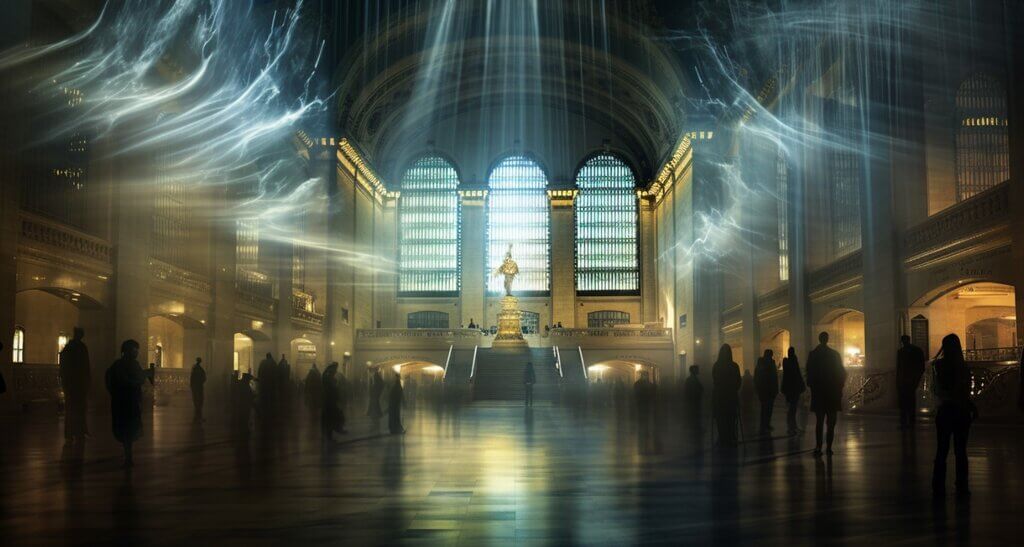
Synthesizing its historical significance and modern updates, this iconic landmark serves as both a bustling transportation hub and a popular tourist attraction in New York City.
The Grand Central Terminal, constructed in 1913, remains a testament to the ingenuity of its time, with its ornate architecture and intricate details.
This impressive construct has been the subject of numerous renovations and updates, ensuring its functionality and relevance in the present day.
More about attractions in New York City
Its rich history and cultural significance are equally matched by its adaptability and resilience.
The terminal's continuous evolution and expansion, most notably the completion of the East Side Access Project in 2023, demonstrate its commitment to serving the city's transportation needs while preserving its historical integrity.
The Grand Central Terminal is a remarkable blend of past and present, a beacon of New York City's perpetual dynamism.

