The Metropolitan Museum of Art, a globally recognized institution in the city of New York, offers unparalleled access to diverse epochs of human creativity.
This article delves into the museum's vast collections, examining their significance, the intricacies of specific collections, and the role of the museum's various departments, digital initiatives, and research resources.
It provides an analytical exploration of the Metropolitan's treasures, giving readers an informed perspective on the magnitude and complexity of its offerings.
The significance of the Metropolitan Museum of Art is underscored by its vast collections, comprising over two million works curated across seventeen departments, making it the largest art museum in the Americas and the eighth most visited globally.
These collections range from classical antiquity and Ancient Egypt to European masterpieces and modern American art.
Notably, the museum maintains an impressive collection of musical instruments, costumes, and accessories, in addition to a significant collection of ancient Near Eastern art.
Furthermore, the establishment houses a unique assortment of African, Oceanian, and American art, demonstrating the museum's commitment to broadening global art understanding and appreciation.
The extensive collection ultimately serves as a testament to the museum's role as a powerful cultural institution.
Significant renovations, valued at $70 million, are currently underway within the African, ancient American, and Oceanic art galleries of this renowned institution, with a projected completion date set for 2024.
These renovations include the installation of a glass wall to better illuminate the galleries and the addition of 3,000 new works.
One notable work is a Benin artifact obtained in 1972 from an auction dating back to 1900.
This steep investment in renovation and expansion signifies the institution's commitment to maintaining its status as a global leader in the arts.
The enhancement of the display and presentation of these collections will not only attract more visitors, but also strengthen the institution's power and influence in the sphere of art and culture.
Diving into the specifics, the Asian Art collection at this esteemed institution boasts over 35,000 pieces, including noteworthy artifacts like the Akota Bronzes from the 7th century and a Bronze Chola Statue of Nataraja.
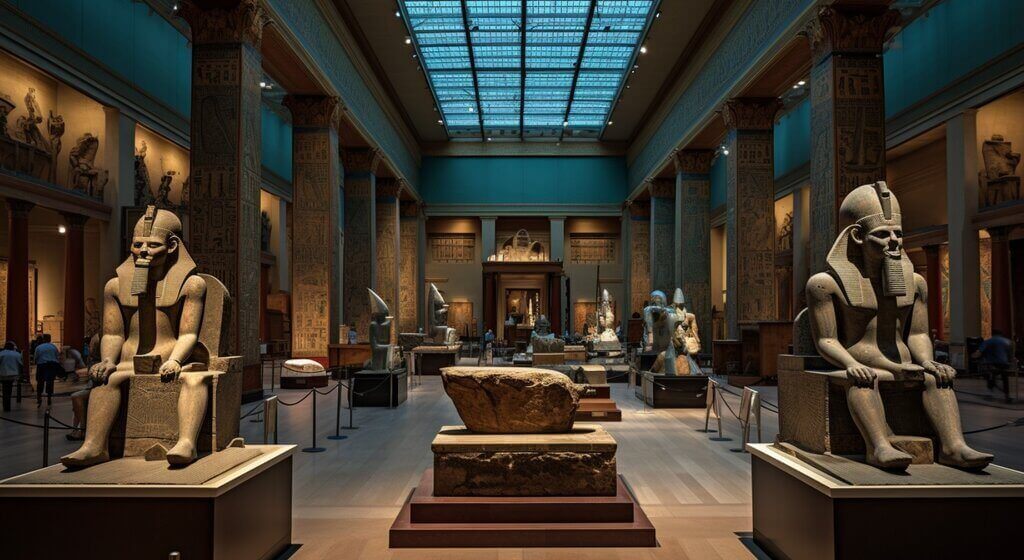
The Egyptian Art collection, most of which came from private collections, comprises over 26,000 pieces on display.
Among the European Paintings collection, which consists of around 1,700 pieces, the European Sculpture and Decorative Arts collection holds over 50,000 separate pieces.
The American Wing covers the period from the 18th through the early 20th century.
The Islamic Art Collection, one of the world's largest, includes artifacts from the rise of Islam, while the Arms and Armor Collection focuses on craftsmanship and decoration from various cultures.
Continuing with the examination of specific collections, the Costume Institute houses over 35,000 costumes and accessories, including those used in the exclusive Met Gala event.
This collection provides insight into the evolution of fashion and its intersection with culture and society.
The Drawings and Prints Department, with over 17,000 drawings and 1.5 million prints, offers an extensive survey of Western art from the Renaissance to contemporary times.
The Robert Lehman Collection, a treasure trove of masterpieces, contributes to the museum's prestige.
The Medieval Art and The Cloisters collection, with its focus on a significant historical period, offers an enriching experience.
In the realm of underappreciated treasures, the Musical Instruments Collection, Photographs Collection, Film Archive, Digital Representation of Collections, and Libraries of the institution offer a broad spectrum of cultural artifacts and resources, adding depth and diversity to the overall holdings.
The Musical Instruments Collection, for instance, boasts notable pieces such as Stradivari violins and the oldest surviving piano, an embodiment of the evolution of musical expression.
The Photographs Collection and Film Archive encapsulate history and artistic creativity through visual mediums.
Meanwhile, the Digital Representation of Collections and Libraries provide accessible platforms for scholarly research and public education.
These collections, though lesser-known, contribute significantly to the institution's rich cultural narrative.
Additional departments and resources at the aforementioned institution play a crucial role in enriching its cultural narrative, offering a comprehensive perspective on art and history.
The musical instruments collection, for instance, encompasses a diverse range of items from various epochs, including the oldest surviving piano, thus providing invaluable insights into the evolution of musical expression.
Read more: Hidden Spaces and Hidden History of New York: Unveiling Grand Central Terminal’s Secrets
The photographs collection, housing over 25,000 images, offers a visual chronicle of societal changes, while the film archive serves as a repository of cinematic history.
The Digital Media Department enhances accessibility and global reach of the institution's treasures, attesting to the institution's commitment to technological integration.
The libraries, with their extensive resources, underpin scholarly investigations, thereby contributing to the advancement of knowledge in the realm of art and culture.
Following the exploration of the Metropolitan Museum of Art's various departments and resources, attention now shifts to the institution's technological advancements and digital initiatives.
These modern endeavours represent a significant stride towards the democratization of art, making it more accessible to audiences worldwide.
The establishment of the Digital Media Department in 2013 marked an important milestone in the museum's digital journey.
It led to the launch of the Open Access initiative in 2017, resulting in over 1.2 billion views and seven million downloads of open access images and data.
In collaboration with the World Monuments Fund, the museum embarked on a digital project that further underscores its commitment to digital accessibility and preservation.
This digital transformation enhances the museum's power and influence in the global art community.
The resources for research and investigation available at this prestigious institution extend beyond physical exhibits to include an extensive network of libraries, with each department maintaining a library and online catalog access.
More information about New York
These libraries not only provide access to an immense wealth of information, but also serve as a platform for academic discourse and intellectual exploration.
The central library, named the Thomas J. Watson Library, is a critical component of this intricate network, offering a comprehensive collection of books, periodicals, auction catalogs, and electronic resources pertaining to the history of art and related disciplines.
Along with Watson Library, the institution also houses specialized libraries and study centers, each focusing on specific domains of art, thus reinforcing the museum's role as an academic powerhouse.

